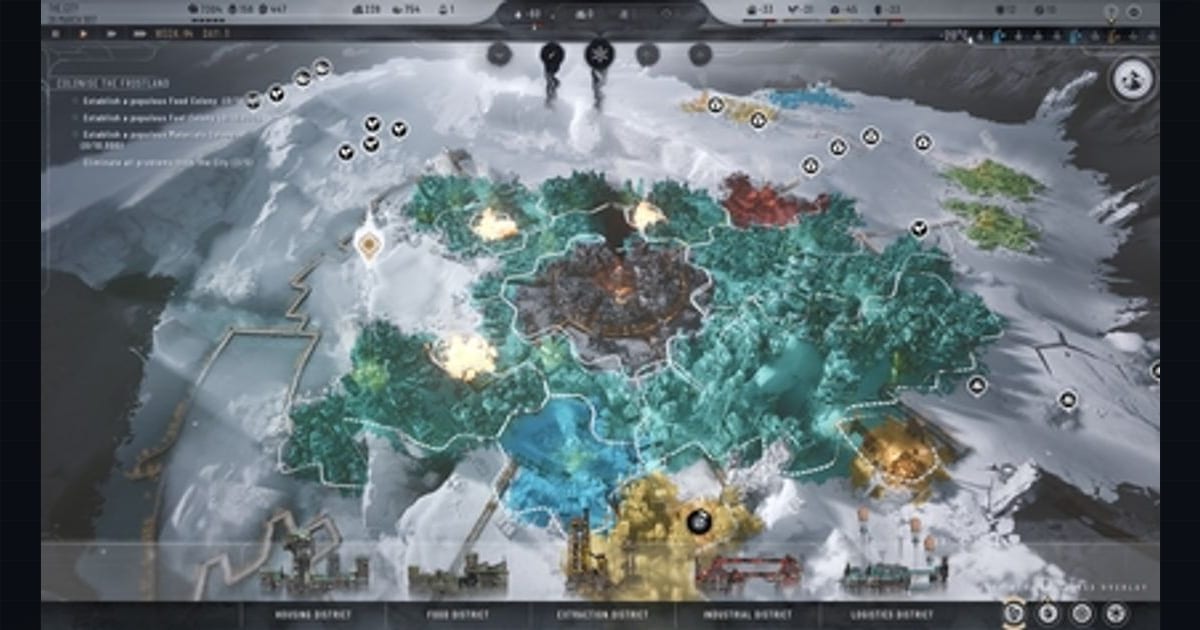
In Frostpunk 2, the primary threat to the City is no longer just the brutal sub-zero blizzard—it is human nature. As the Steward of New London, ruling via decree is impossible. Every major societal decision must pass through the democratic Council Hall, where competing factions (such as the Stalwarts and the Pilgrims) battle for the future of humanity through ideological warfare.
Key Takeaways
- Ideological Axes: Factions align along three philosophical divides: Adaptation vs Progress, Equality vs Merit, and Tradition vs Reason.
- Negotiation Leverage: Passing critical laws requires promising research projects, building concessions, or future agenda slots to skeptical voting blocs.
- Radicalization Thresholds: Ignoring a factionfaction. An in-game group or nation players can align with or fight against, with its own goals and reputation system.’s grievances radicalizes their members into militant zealots who initiate strikes, sabotage districts, and spark riots.
Faction Ideology Matrix
| Ideology Axis | Philosophy A | Philosophy B | Societal Impact |
|---|---|---|---|
| Survival Axis | Adaptation (Embrace cold, harvest frostland) | Progress (Conquer nature with heavy machines) | Dictates Generator fuel tech & district heating |
| Social Axis | Equality (Universal food rations, shared burdens) | Merit (Incentivize high performers, rationing) | Affects worker productivity and citizen tension |
| Cultural Axis | Tradition (Strict family roles, historical continuity) | Reason (Scientific optimization, pragmatism) | Determines healthcare efficiency and schooling laws |
Council Hall Negotiation Tactics
When a crucial bill lacks a voting majority:
- Target Moderates First: Do not attempt to bribe extreme zealots. Focus your political capital on moderate unaligned delegates who require minor promises (like funding a hospital).
- Fulfill Promises Promptly: Failing to deliver on a signed council promise within the designated timeline triggers a severe Trust collapse and drops your authority rating.
- Emergency Recess: If a catastrophic bill is guaranteed to pass, exercise your Steward’s privilege to delay the vote or enforce an emergency recess, buying time to build faction support.
De-escalating City Protests
Deploy peacekeeper squads to protect vital extraction districts while funding communal soup kitchens to drain tension before peaceful protests escalate into violent factional riots.
Inside the Vote: Delegates, Thresholds and the Recess Clock
11 bit studios frames the system on the store page as factions that “watch your every step inside the Council Hall,” and the arithmetic behind that phrase decides every law you pass. The Council is made up of 100 delegates drawn from the city’s communities and factions, and an ordinary law needs a simple majority of 51 to carry. Rule laws, the ones that hand the Steward personal authority, cost more: they require a two-thirds supermajority of roughly 67 votes.
| Proposal type | Votes required | Consequence of failure |
|---|---|---|
| Ordinary law | 51 of 100 | Bill is rejected and must wait for the next session |
| Rule (authority) law | Two-thirds, about 67 | Same lockout, but on a much harder bar |
| Seat bloc | Behaviour | Can it be moved? |
|---|---|---|
| Committed “For” | Votes yes once declared | No — count it |
| Committed “Against” | Votes no once declared | No — subtract it |
| “Hesitant” | Undecided until the vote | Yes — the only swing votes |
Each delegate is marked For, Against or Hesitant before the session. Committed delegates vote as they declared, so the result is effectively decided by the Hesitant block. That is why a proposal sitting at forty committed votes is not dead: before spending anything, open the bill and count the delegates flagged as mostly hesitant, then negotiate with whichever group holds the largest hesitant share rather than the loudest faction.
Negotiation is a contract, not a conversation. A group offers three terms — research a named technology, build a specific building, pass or repeal a law, fund a project, condemn a rival faction, or hand over the next agenda — and you select exactly one. Deliver it and relations rise. Miss the deadline and they fall, and a broken promise can also raise that group’s fervour and its appetite for protest.
This is also the mechanical reason the moderate-first rule works. Communities are flexible and can be negotiated into voting against their own leaning; factions are not, because they vote for anything matching their three-axis worldview and against anything opposing it, and they refuse to bargain when a bill cuts against them.
Timing is the trap. After every vote, passed or failed, the Council recesses for ten weeks, and a rejected bill cannot be re-presented until the next session. If you are juggling several promises that each require passing a law, a single ten-week gap can strand them all, so it pays to clear law-passing promises before spending the session on anything else.
The recess has one escape hatch. The Emergency Voting Session, triggered from the City Center at the Generator, convenes the Council immediately instead of waiting out the ten weeks. It is not free: the move reduces Trust with every faction, which can make the very law you forced to a vote harder to carry.
If you cannot buy the votes, you can lean on them. Guided Voting, a Rule law that needs the same two-thirds threshold as any other authority bill, pulls hesitant delegates toward whichever side you choose without a negotiation deal, at the cost of relations with the groups you overrode. Pushed to its end, the Rule branch unlocks Captain’s Authority, after which voting stops being a problem: the Council remains, but all 100 delegates simply vote as you wish.