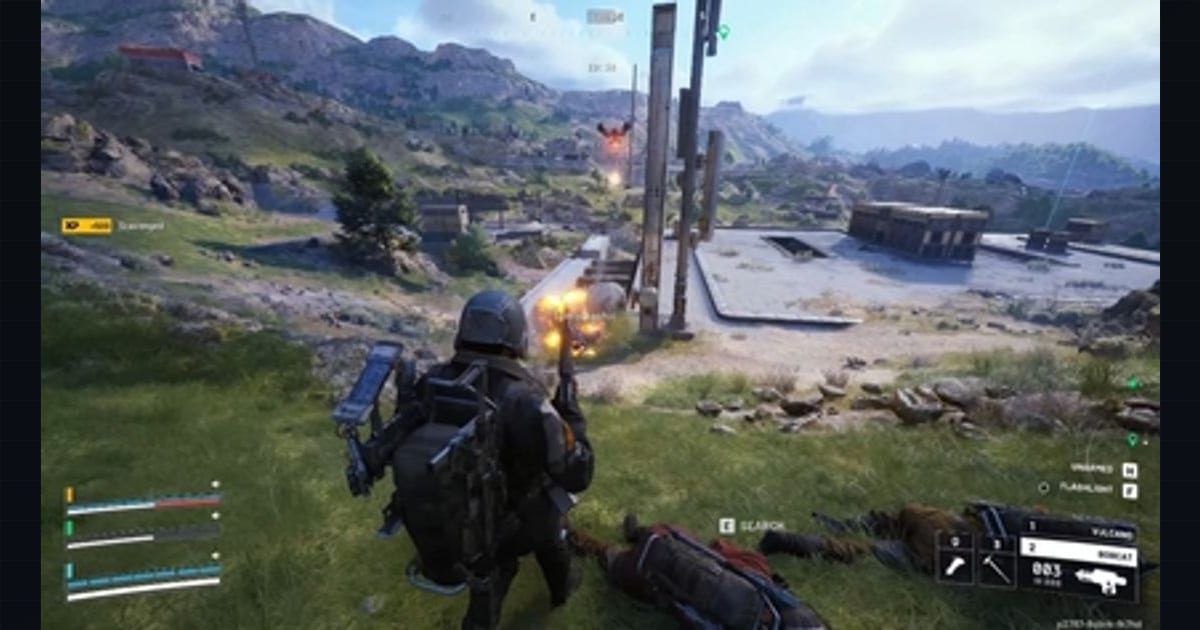
ARC Raiders launched on 30 October 2025 as a PvPvE extraction shooter set in a machine-infested Rust Belt, with a hub called Speranza and one unkind rule: whatever you carry Topside can be taken off you. Embark marked the game’s first year on 30 October 2026, and by then the currency had been retired, the skill tree rebuilt, a map added beyond the old play space and the reward structure replaced. Much of the launch-week advice no longer applies.
This page is the start-here piece. It covers what the loop asks of you, what the loadout maths actually is, which map to learn first, and what the numbers look like after Frozen Trail. Every mechanical value below is the one stated in the Frozen Trail 2.0 notes (8 October 2026) and Live Update 2.3.0 (27 October 2026), with the 2.4.0 store patch (3 November 2026) as the current build.
What this covers: the whole first loop of ARC Raiders — Speranza, custom and free loadouts, weight and safe pockets, the map and condition list, the machines you meet first, and the Reward Pass that replaced Cred. Why it matters: the decisions that ruin a first week are made in the menu, not in a firefight. Loadout choice decides how much stamina you have, what you can carry home, and whether anything survives a death. Who should care: anyone who arrived during the 8–12 October 2026 free window, lapsed players returning to a reworked skill tree, and squadmates being talked into a first raid.
The game, in one screen
Embark Studios developed and self-published ARC Raiders. At the time of writing, Steam’s English-language tally reads 204,513 reviews at 81% positive, with the last thirty days at 72% across 9,038 reviews. It also won Most Innovative Gameplay at The Steam Awards 2025.
| Item | Detail |
|---|---|
| Release | 30 October 2025 |
| Studio | Embark Studios (developer and publisher) |
| Platforms | PC via Steam and Epic, PS5, Xbox Series X|S, cross-platform multiplayer |
| Genre shape | PvPvE extraction: loot a surface zone, fight ARC machines and other Raiders, reach an exit |
| Hub | Speranza — traders, workshop, quests, projects, codex |
| Review standing | 81% positive across 204,513 English Steam reviews; 72% over the last 30 days |
| Award | The Steam Awards 2025 — Most Innovative Gameplay |
| Current build | Store Update 2.4.0 (3 November 2026), on top of Live Update 2.3.0 (27 October 2026) |
| Free to play? | No. A free window ran 8–12 October 2026 alongside Frozen Trail |
| PC extras | Cross-platform multiplayer, kernel-level anti-cheat, Denuvo |
| Minimum spec | Core i5-6600K or Ryzen 5 1600, 12 GB RAM, GTX 1050 Ti / RX 580 / Arc A380 |
| Recommended spec | Core i5-9600K or Ryzen 5 3600, 16 GB RAM, RTX 2070 / RX 5700 XT / Arc B570 |
The loop, in the order you meet it
Speranza is where a raid is assembled and its proceeds spent. Embark’s framing at the 2025 Server Slam was that “survival means connection”: traders run quests, buy what you dragged home and sell gear you could not craft, while the workshop handles weapon, equipment and medical crafting. Projects and Expeditions are the long-horizon layer, where a Raider departs permanently and trades progress for carried-over benefits.
Then you pick a map, a map condition and a loadout, and you go Topside. What happens there is a looting problem wearing a shooting problem’s clothes. Embark’s launch-week survival tips are still the cleanest statement of the game’s priorities:
- Plan your loadout — bring the tools for the mission, “not everything you own”.
- Breaching is loud — opening a locked door or container pays out, and also calls ARC and other Raiders toward the noise.
- Stay alert — extraction points disappear over time, so the longer you stay the greater the risk.
- Be smart — know when to extract, “or you might just lose it all”.
Read those four together and the intent is clear: the raid is a clock, not a sandbox. Every extra container is a bet against an exit that will not wait.
The loadout decision, and the maths behind it
The loadout screen decides more than the map screen does, and there are three ways in.
A custom loadout pulls from your stash. Per the community wiki’s loadout page, backpack space lands between 16 and 24 slots depending on the augment, safe pocket slots run from one to three, and every augment carries a weight limit between 40 and 80. Exceed that combined weight of gear plus loot and the wiki’s description is blunt: your stamina is “dramatically reduced”.
A free loadout costs nothing and hands you a random low-tier kit: a Kettle, Stitcher or Rattler with matching ammo, two bandages, a shield recharger, one or two utility items and a Light Shield. Its Free Loadout Augment gives 14 inventory slots, four quick-use slots, two weapon slots, no safe pocket, and a 35.0 weight ceiling.
Going empty-handed is also legal: a custom loadout with 10 backpack slots, one safe pocket and no gear. It wins on matchmaking, where you are more likely to join a match at its start than with the free kit.
| Option | Backpack slots | Safe pocket | Weight ceiling | Cost | Trade-off |
|---|---|---|---|---|---|
| Custom loadout | 16–24 | 1–3 | 40–80 by augment | Gear from your stash | You fund every death |
| Free loadout | 14 | None | 35.0 | Free | Random kit, no way to secure loot |
| Empty-handed | 10 | 1 | Not stated | Free | No weapons; better join-at-start odds |
Safe pockets are the part newcomers misread. They hold one item or one stack, and their contents are secured even if you die; weapons cannot go in them, so you are choosing between a blueprint, a rare material and whatever else you cannot replace. They exist only on a non-free augment.
For the attachment and ammo side of the same decision, the site’s weapon modding and tier list covers which guns earn their slot.
Weight, stamina and the stash ceiling
Weight is the resource the interface mentions least and punishes hardest, and two Frozen Trail 2.0 changes sharpen it. Weapon slot weight reduction now applies to the loadout only, so stuffing a heavy gun into a bag no longer discounts it. And the stash can be upgraded two more tiers, to a maximum of 328 slots without Expedition bonuses or purchased Nomadic Envoy space — the real progression track for a hoarder, since everything you extract has to live somewhere.
Protection moved too. The Heavy Shield’s durability decay dropped from 0.20 to 0.15 and its movement penalty from 15% to 10% in Frozen Trail; 2.3.0 then raised base charge from 80 to 90, citing low usage. Mobility items were deliberately separated instead of upgraded into each other: the Snap Hook went from 20 m to 18 m range, with durability consumption up from 2% to 4% per use and power cost from 50 to 60, so it now reads as a burst tool rather than a general-purpose one, sitting alongside the newer Grappling Hook.
Maps and conditions, dated
Seven maps appear across the wiki and Embark’s 2026 patch notes, and the differences are big enough to plan around.
| Map | What the record shows |
|---|---|
| Dam Battlegrounds | The launch map Embark used to introduce the loop; hosts conditions including Electromagnetic Storms and Night Raids |
| Blue Gate | Lighting reworked in Frozen Trail; collision and stuck-spot fixes in 2.0 |
| Buried City | Hospital roof made climbable, ray-traced shutter lighting restored in 2.0 |
| The Spaceport | Fence-gap stuck spot fixed in 2.3.0 |
| Stella Montis | Collision fixes in 2.3.0; the wiki names it as a dangerous place to chase one specific item |
| Riven Tides | Overall loot value raised by roughly 15% in 2.0 |
| Pendola Pass | Added 8 October 2026; first and only map testing the Dynamic Loot Zone system |
Two things about Pendola Pass matter beyond the scenery. Its Dynamic Loot Zone test varies an area’s value from raid to raid while keeping its loot type fixed, breaking memorised routes on purpose. And the Frigatefrigate. A player-built warship used to protect naval trade routes from pirates. and Redirection conditions arrived with it — both are excluded from the PvE toggle experiment, alongside Night Raid, Locked Gate and Hidden Bunker.
The machines you meet before the machines that matter
Embark’s introduction to ARC listed four archetypes, and they still describe the first ten hours. Wasps are swarming fliers that fire accurately. Ticks are small scuttlers waiting in the dark for you to come close. Bastions are slow tanks that erase anything in their sight line. Leapers are agile jumpers that close the gap before you react. The studio’s advice about them was about sound rather than stats: “a low hum, a metallic skitter, the warning whine of a weapon spinning up”. Frozen Trail added three more that change the shape of a fight — the Bully, which suppresses a position; the Skulker, which stalks and reappears; and the Hydra, a squad-killer guarding the Emperor wreck and the Frigate. Patch 2.3.0 also moved loot deeper inside the Emperor, so the entrance is now the cheap part of that dungeon. For the full threat matrix and damage windows, the site’s machine threat tiers and extraction play goes enemy by enemy.
Progression: what replaced Cred
Cred is gone. It stayed spendable until 8 October 2026 and then expired with Frozen Trail, replaced by Reward Points, a currency that applies automatically to whichever pass you have active. The Reward Pass is the new structure: 60 levels across a free and a premium track, with exactly one pass active at a time. Old Raider Decks were not deleted — they moved into a Legacy Pass, and anything already unlocked shows as granted.
Feats, the small in-raid challenges, now pay Reward Points by difficulty: 15 for easy, 25 for medium, 50 for hard, with each also advancing the weekly milestones by one, two or three steps. Each milestone is worth 250 Reward Points and there are three per week, at 4, 8 and 12 milestone progress.
Quests became a progression lane too: objectives now grant XP, and Frozen Trail added 22 quests. The Outpost is the other new sink — unlocked by a project whose first step asks for a photograph of a farmland house, with the camera bought from Shani, crafted at the workbench or found Topside. It expands through modules, unlocks a research bench, and Embark ties it to amplifying weapons to a fifth tier.
The skill tree you will actually use
Steam describes the tree as three branches — Survival, Mobility and Conditioning — with Survival covering faster looting and quieter movement, Mobility covering outmanoeuvring threats and Conditioning covering Strength and Stamina. Frozen Trail rebuilt how the branches end. The middle of each branch is now a binary choice between two skills, and the branch end offers three skills of which you may take up to two once you have invested enough points. Embark said the reset is when you get to make the choice again, and that further tuning of the new skills is expected.
The practical consequence is that the tree is now a commitment device rather than a shopping list: the mid-branch binary means you cannot have both halves of a branch’s identity at once, so decide what your Raider does badly before you spend.
PvE is a test, not a mode
The most common question from new players is whether they can avoid other players. The honest answer as of the 2.4.0 build is: not permanently. Embark ran a PvE matchmaking toggle as a limited test from 13 to 20 October 2026. On PvE servers there was zero player-to-player damage, throwables including stun and fire items did not work on other players, overall loot value was lowered, squad separation was not prioritised, and ARC could re-acquire downed players after an eight-second grace period. Five major conditions — Night Raid, Locked Gate, Hidden Bunker, Frigate and Redirection — did not offer PvE at all. More than 30 million PvE rounds were played during the test. Embark called the response polarising, said the decision would prioritise “the overall health and enjoyability of the game”, and expected to follow up in November. Until that follow-up lands, the standard PvPvE queue is the game.
Your first six hours, as a plan
None of this needs a spreadsheet, which is the point.
- Spend the first two raids on one map. Learn two exits from it. Extraction points disappearing is a timer, and a known exit is worth more than an extra container.
- Take the free loadout while you are still losing kits. It costs nothing and teaches the 35.0 weight ceiling, but accept that it has no safe pocket.
- Switch to a custom loadout as soon as you own something you would hate to lose, and put that thing in a safe pocket.
- Treat breaching as a decision, not a habit. The noise is the price; if you are already carrying value, the door is usually not worth it.
- Do not chase the Anvil. Frozen Trail moved it from green to blue rarity and removed its Tech Mod slot; the Anvil Splitter is now an upgrade for the Amplified Anvil, the base item no longer drops, and the Bantam took over as the uncommon hand cannon.
- Re-learn explosives if you last played at launch. Hullcracker-class explosives now deal over 50% more to armour plates and around 30% less to fragile parts, flipping the old advice about aiming explosives at weak points.
Three changes catch returning players: “Solo vs. Squads” was removed from the matchmaking options while Embark re-evaluates its role, starting an Expedition no longer resets your quests by default, and the engine moved twice in two months — 1.45.0 took Unreal EngineUnreal Engine. A widely-used commercial game engine from Epic Games; powers many large-studio (AAA) games. UE5 is the current generation. from 5.3 to 5.7, Frozen Trail 2.0 upgraded to AMD FSR 4.1.1, and 2.3.0 updated the FSR plugin to that same version — so performance advice older than October is worth discarding.
Next read
- ARC Raiders Update Cadence Guide — the dated patch record behind every number on this page, and how the three-week fix cycle works.
- ARC Raiders Machine Threat Tiers and Extraction Play — the enemy-by-enemy handbook this page deliberately does not duplicate.
- ARC Raiders Weapon Tiers: Attachment Slots and Ammo — what to put in the two weapon slots the loadout gives you.
- ARC Raiders vs Tarkov vs Delta Force: Cost of Dying — if you have not bought in yet, what losing actually costs in each game.