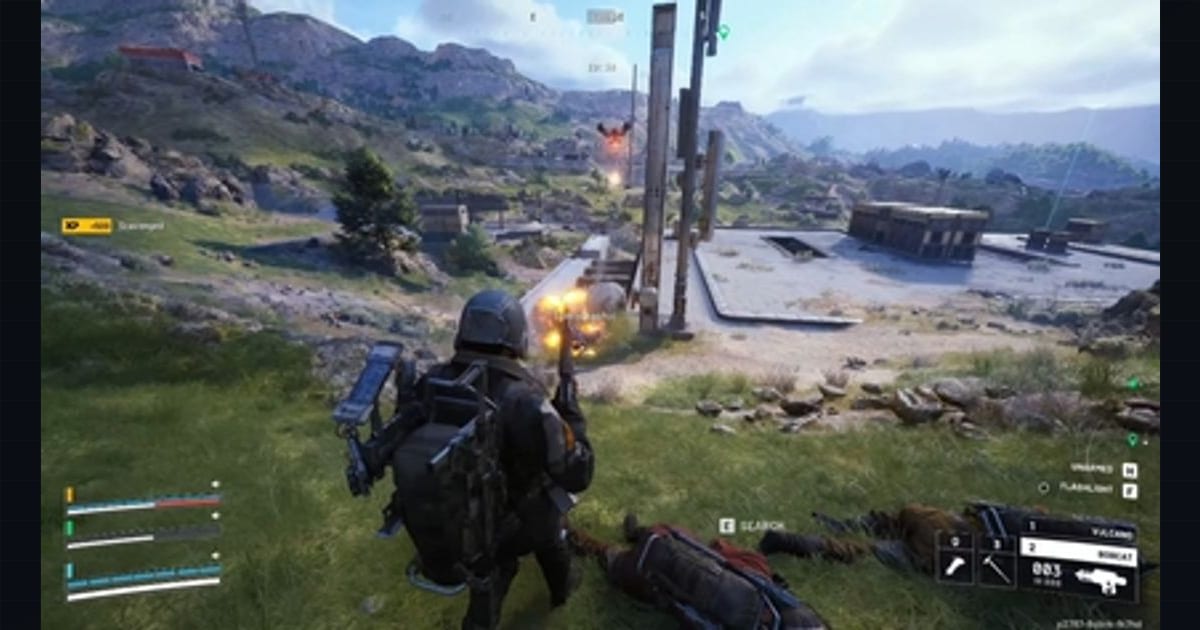
Embark Studios’ ARC Raiders drops scavengers into the ruins of southern Italy, where ruthless mechanized autonomous war machines (the ARC) fight human raiders for surface salvage. Success in ARC Raiders demands balancing third-party PvP gunfights against the relentless airborne and armored machines that respond aggressively to gunfire and audio signatures.
Key Takeaways
- Acoustic Detection Grid: Gunfire is among the scripted noises ARC machines react to, and unsuppressed weapons let that alert carry far wider, pulling in machines and rival Raiders alike.
- ARC Threat Hierarchy: Prioritizing target elimination—killing Snitch drones before they summon armored walkers—is the difference between clean extraction and total team wipe.
- Extraction Elevator Mechanics: Triggering an extraction beacon alerts the entire zone with a 90-second siren countdown, demanding perimeter trap preparation.
ARC Machine Threat Classification Matrix
| ARC Unit | Threat Tier | Attack Modality | Weakpoint Vulnerability | Tactical Response |
|---|---|---|---|---|
| Snitch Drone | Priority 1 | Recon alert siren, summons reinforcements | Top thruster lens (1-shot rifle) | Destroy immediately before alert beam completes |
| Tick Swarm | Priority 2 | Explosive charge-and-detonate rush | Fuel tank | Any weapon — shoot it on approach |
| Leaper | Priority 3 | High-jump traversal, shockwave pulse | Eye and leg joints | Dodge roll underneath jump and fire into the eye |
| Bombardier | Priority 4 | Heavy artillery mortar, tracking missiles | Joint actuators on quadruped knees | Heavy anti-armor rockets and coordinated team fire |
Noise Discipline and Third-Party Management
- Suppressed vs Unsuppressed Fire: ARC machines react to gunfire as one of their scripted audio triggers, and unsuppressed weapons let that alert carry far wider — pulling other Raiders as well. Run integral suppressors on secondary sidearms for clearing drone scouts silently.
- Audio Traps: Abandoned vehicle alarms, startled bird flocks, and breaking wooden barriers telegraph player movement across subterranean tunnels.
- Third-Party Timing: When two rival raider squads engage, refrain from firing until ARC reinforcement pods land between them, forcing both teams to exhaust heavy ordnance before you breach.
Extraction Elevator Defense Protocol
When calling the extraction elevator:
- Deploy gas canisters and proximity mines along the two primary approach corridors.
- Hold high ground cover above the elevator pad until the final 10 seconds of the descent timer.
- Do not enter the elevator cage simultaneously; maintain staggered crossfire until the doors seal.
Reading a Threat Before the Fight: Scanner States and Armor Plating
The matrix above decides what to kill first once a fight has already started. Before that, every ARC hands you two readable signals: what state it is in, and where it can actually be hurt. Both can be read from cover, without firing.
Every ARC machine has three scanner modes, identified by the color of the light on its scanner. Blue is patrol mode: the machine is passively searching and has not fixed on anything. Yellow is an alerted state, entered after possible Raider activity; in it the machine investigates the disturbance and then lowers its alert level again if it finds no one. Red is combat mode: the machine has found a target and attacks until it loses it.
The note worth memorizing is that a machine attacked while it is still on patrol can skip the investigation step and enter combat immediately. A clean opening shot from concealment is therefore worth more than a first hit that leaves a blue scanner alive and alerted, and a yellow light that slides back to blue tells you the machine has lost you and the ambush can be reset.
Armor is the second read. ARC plating comes in three visual classes, and they map directly onto how you should spend ammunition. Unarmored plating is matte white, damaged by nearly everything, though rounds with moderate ARC Armor Penetration or above are the most efficient. Armored plating is shiny dark gray: anything below moderate penetration bounces off, and sustained fire from a qualifying round strips the plate away to reveal weaker material beneath. Weak points are matte, bright yellow, and damage against them deals direct damage to the machine; the wiki’s armor table notes that any weapon can use them because they bypass armor.
That last point is the whole tactical edge of the system. A low-penetration weapon is not useless against a heavy machine, but it is a poor tool for firing into intact dark plating. The reliable sequence is to read the plating, spend the first shots where they will break something, and switch immediately to the exposed yellow once it appears.
| Visual cue | What it means | How to respond |
|---|---|---|
| Blue scanner | Patrolling, no target | Stay out of its cone, or open with a one-shot |
| Yellow scanner | Alerted, investigating | Hold still or reposition; it calms down without contact |
| Red scanner | Combat, target found | Break line of sight or fight from cover |
| Matte white plating | Unarmored | Any weapon works; moderate penetration is most efficient |
| Shiny dark gray plating | Armored | Moderate penetration or better, or rotate to a joint |
| Matte bright yellow | Weak point | Priority target; damage bypasses armor |
Applied to specific machines, the read turns a threat tier into a firing plan. The Bastion and the Bombardier are heavy walkers whose weak points are the yellow leg joints and the rear canister, so the answer is to work an angle rather than trade shots with their frontal armor; the wiki adds that both are usually escorted by Hornets and Wasps, which makes the escorts part of the fight rather than a distraction. The Sentinel is a long-range sniper turret: a solid red beam means it is aggroed, and four converging yellow beams mean a shot is imminent, so hard cover and a reload-window peek are the whole engagement. Aerial units — the Hornet, Wasp, Snitch and Firefly — are destabilized by destroying their thrusters, and the Snitch in particular is marked to be destroyed quickly because they loudly alert nearby ARC and can summon reinforcements.
None of this replaces the ranking above. It is the layer underneath it: scanner color tells you whether a fight has genuinely begun, and armor color tells you where the fight has to happen.