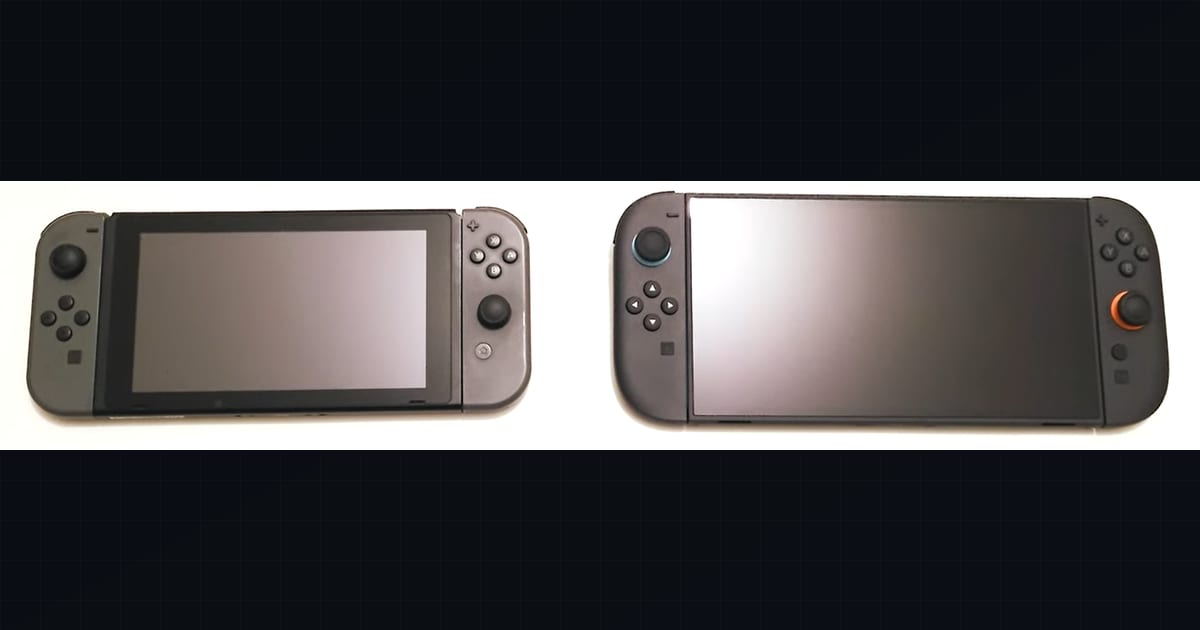
The Switch 2’s first year was a launch year — a new hardware line and a library finding its feet. The 2026 holiday season is different: Monster Hunter Wilds arrives December 4, Diablo IV is already on the platform, Wo Long 2 lands in March, and the console’s third-party pipeline now runs parallel to the other consoles instead of a generation behind. If you’re buying a Switch 2 this holiday, here’s the decision guide.
What this covers: What the Switch 2 is in late 2026, the games that define this holiday window, and the buy-now-versus-wait calculus. Why it matters: December 4 changes the console’s value proposition — a monster-hunting launch plus an existing catalog makes this the first holiday where the Switch 2 sells on software, not novelty. Time to read: About 6 minutes.
The holiday 2026 state of the machine
| Layer | State |
|---|---|
| Headline arrival | Monster Hunter Wilds — December 4, 2026 (physical pre-orders open, digital from October 19) |
| Already shipped (2026) | Diablo IV: Age of Hatred Collection — since September 15 |
| Confirmed 2027 | Wo Long 2: Wings of Ember — March 4, Monster Hunter Wilds: Ascendance expansion |
| Deals | First bundle pricing appearing (e.g., Super Mario Galaxy 1+2 bundle around $499.99 per retailer reporting) |
| What it runs | Current-gen third-party (Unreal 5-era engines), Switch 1 backward compatibility, DLSS-assisted upscaling from the T239 |
Who should buy this holiday
Buy now if any of these is true: you want Monster Hunter Wilds portable (the December 4 launch plus the Ascendance expansion in 2027 make it a platform-defining run); you skipped the Switch 2’s launch and want the back catalog plus the new arrivals in one purchase; or you want Diablo IV or the announced 2027 slate on a handheld. The hardware hasn’t changed since launch — there’s no “Pro” waiting in the wings to obsolete your purchase mid-cycle.
Wait if your interest is a specific unannounced title with no window, or you’re hoping for a hardware revision in 2027 — nothing official suggests one.
The honest read
The Switch 2’s second holiday is the first one where the machine’s pitch is a catalog, and that’s the meaningful shift: launch year was about the leap (DLSS, the new Joy-Cons, the screen); holiday 2026 is about the games — Monster Hunter Wilds is a genuine system-seller arriving at exactly the right retail moment, and the third-party cadence (Diablo IV now, Wo Long 2 in March, plus everything already in the store) means the “Nintendo console for Nintendo games” framing finally has real exceptions. The bundle pricing emerging now is the signal that retailers see it too.
If you’re buying for a holiday gift: the December 4 Monster Hunter date means late-November purchases miss it by days — check whether your target would rather have the console early or the complete package after.
Cartridge, game-key card or download: how this holiday’s library is sold
Nintendo Switch 2 sells its software in physical shapes that behave differently from one another, and the holiday buyer will meet them all. The first is a standard game card, which Nintendo says lets you “start playing immediately” once inserted. The second is a game-key card: “Nintendo Switch 2 supports both regular game cards and game-key cards. Some games will use game-key cards while others will continue using regular game cards.” A game-key card does not hold the game at all — it “doesn’t contain the full game data” — and instead acts as a key to download the title over the internet; the card itself carries a key icon on its front. The third shape is a case that holds only a download code, which Nintendo notes happens “for some software.”
The catch with a game-key card is that first download. You need an internet connection and enough free space in the console’s system memory or a microSD Express card, but after that the game “can be started even without an internet connection.” The card itself must stay inserted to play, exactly like a cartridge, and Nintendo confirms “a Nintendo Account is not required to download the game data.” A game-key card is therefore a shelf copy with a one-time install: a reasonable gift, but not playable straight out of the box without Wi-Fi.
Storage is the other half of the purchase. The console ships with 256 GB of internal UFS storage, part of it reserved for the system, and it accepts only microSD Express cards — sold separately, in capacities up to 2 TB. A microSD card carried over from a Switch 1 “cannot be used with Nintendo Switch 2” for games. Three details decide whether a buyer must budget for a card: downloadable software, updates and DLC can live on a microSD Express card, but save data cannot, because “game save data is stored to the system memory” even for physical games; external USB drives “are not currently supported”; and Nintendo states there are “not individual games that require additional storage space to play” at this time.
Then comes the edition layer. A Nintendo Switch 2 Edition of an older game adds features unique to the new console, yet the physical release “contains the content of the Nintendo Switch software, along with additional content that takes advantage of the performance of the Nintendo Switch 2.” Owners of the original can buy the upgrade pack instead, and both routes contain the same content. The edition even runs on an original Switch, but there the playable content “is the same as the Switch software,” with the Switch 2 upgrades absent. For a Switch 1 game card dropped into Switch 2, Nintendo says “the loading time is about the same.”
| Form | On the card | First-run internet | Space needed | Notes |
|---|---|---|---|---|
| Game card | The full game | No | Minimal; updates may download | Plays as soon as it is inserted |
| Game-key card | A launch key only | Yes | Full download to memory or microSD Express | Card must stay inserted; no Nintendo Account needed |
| Download-code case | Nothing — code inside | Yes | Full download | Nintendo sells this “for some software” |
| Switch 2 Edition | Switch 1 content plus Switch 2 upgrades | No | Updates may download | Upgrade pack gives owners the same content |
| Switch 1 game card | Switch 1 content | Often an update | Varies by title | Load times “about the same” as on Switch 1 |
For the holiday shopper the mapping is direct. If December 4’s Monster Hunter Wilds or March’s Wo Long 2 is the centerpiece, decide in advance whether the receiver wants a physical shelf copy — game-key card, Wi-Fi on day one — or an instant download, and whether the built-in 256 GB is enough or a microSD Express card belongs on the list too. Check the “Required Storage Space” figure printed on the packaging or the eShop page before buying; that number, not the 256 GB headline, is what tells you whether extra storage is needed.
Next read
- For the December 4 game, see Monster Hunter Wilds Ascendance at TGS 2026 — Teostra, Boost Bracer, 2027.
- For the hardware inside, see Switch 2 DLSS Primer: T239 Upscaling and Handheld Mode.
- For the launch-era view, see Nintendo Switch 2 — Launch Library, Backward Compatibility & First Patch Cycle and Docked vs Handheld Performance.
- All our coverage lives on the Nintendo Switch 2 hub.