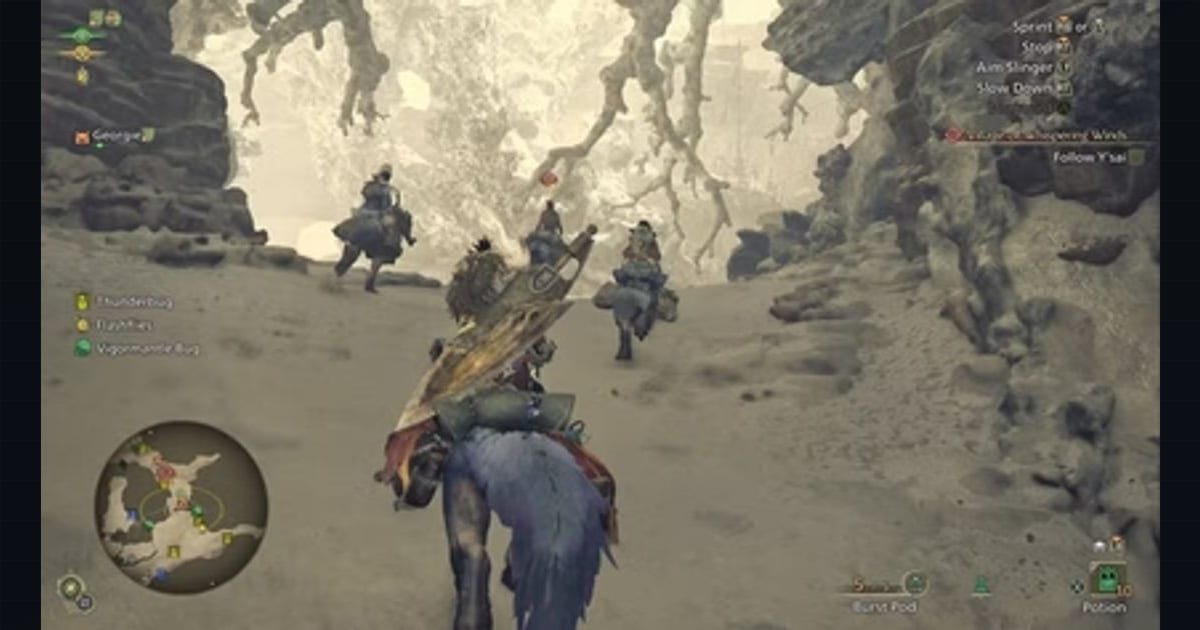
Focus Mode represents the most substantial mechanical evolution in Monster Hunter Wilds, replacing the traditional lock-on and static hitzone systems with real-time manual aiming, camera-relative attack vectors, and dynamic wound rupturing. For hunters transitioning from Monster Hunter World or Rise, mastering Focus Mode is not optional—it is the central damage multiplier that dictates hunt times, part breaks, and monster stagger loops.
Key Takeaways
- Independent Reticle Control: Holding L2/LT uncouples hunter attack trajectory from character facing direction, allowing 360-degree attack steering mid-combo.
- Wound Creation Thresholds: Repeated strikes to a specific monster anatomical part open a glowing red wound hitzone; attacks that hit the wound deal increased damage to that part.
- Focus Strike Finishers: Hitting an active wound with R1/RB triggers a weapon-specific Focus Strike that ruptures the wound, deals massive burst damage, and stuns the monster.
Focus Mode Core Controls and Targeting Mechanics
In previous generations, melee weapons attacked along the character model’s forward vector. In Wilds, engaging Focus Mode overlays a targeting reticle and aligns weapon attacks directly with the player’s camera crosshair. This fundamentally alters directional weapon tracking for heavy weapons like Great Sword and Gunlance.
| Mechanic | Standard Control Mode | Focus Mode Activated | Tactical Impact |
|---|---|---|---|
| Attack Steering | Locked to 45° forward cone | 360° fluid camera alignment | Eliminates missed True Charged Slashes |
| Guard Direction | Model facing angle only | Camera crosshair direction | Enables instant directional blocks on monster charges |
| Hitzone Feedback | Blood splash sizing | Glowing red wound highlighting | Clear visual priority for team DPS focus |
| Finisher Trigger | Monster down / stun states | R1/RB on exposed wound | Creates guaranteed stagger windows on demand |
Wound Generation and Rupture Thresholds
Wounds in Monster Hunter Wilds are dynamic anatomical vulnerabilities generated by concentrated damage. Every monster body part possesses a hidden damage accumulation bar. Once breached, the skin or carapace fractures into an open wound.
- Accumulation Phase: Striking a specific part (e.g., Doshaguma’s front forelegs) builds wound threshold damage. Slashing, blunt, and shot damage contribute equally to the threshold.
- Exposed State: The wound manifests as glowing reddish fissures. All attacks striking this region receive increased damage numbers.
- Focus Strike Rupture: Pressing the Focus Strike button when aimed at an active wound triggers a cinematic multi-hit finisher. This ruptures the wound, clears the fissure, and drops valuable monster material shiny pods.
Weapon-Specific Focus Strike Applications
Different weapon archetypes utilize Focus Strikes for distinct combat loops:
- Great Sword: Executes a devastating piercing thrust that anchors into the wound before tearing outward, refunding full charge levels directly into a follow-up True Charged Slash.
- Long Sword: Performs a rapid helmbreaker-style vertical cleave that instantly fills the Spirit Gauge to the next aura tier without requiring a full Spirit Blade roundslash combo.
- Bow & Light Bowgun: Fires an armor-piercing tracer dart that concentrates subsequent normal shots directly into the ruptured weakpoint.
Wound States, Tempered Wounds, and Focus Mode Patch History
The sections above treat “wound” as a single object; the game’s own hunting tips break it into three visible states. The in-game text, quoted on the Monster Hunter Wiki, reads: “By attacking a monster continuously on one spot, you can open a Wound. There are three levels to a Wound: a Tear, then an Open Wound after further attacks, and finally a Scar after the Wound is destroyed.” A tear is the white, partially-damaged spot; further attacks open it into a full wound, which a Focus Strike can then destroy. Once destroyed, the wound becomes a scar, and per the same page neither a tear nor a fresh open wound can form in a scar’s place until the scar clears with time.
| State | Appearance | Focus Strike result |
|---|---|---|
| Tear | White partial-damage spot | Keep attacking the same part |
| Open Wound | Red, bleeding gash | Destroys the wound in one hit and stuns the monster |
| Scar | Black tissue left by a destroyed wound | The spot cannot be re-wounded until the scar clears |
| Tempered Wound | Blue gash opened from a tempered scar | Destroyed; drops a heavy pod instead of leaving a scar |
Tempered monsters change that loop rather than extend it. The wiki records that tempered monsters arrive carrying tempered scars; attack one and it opens into a blue tempered wound, and destroying it leaves no scar, dropping a heavy pod for the hunter instead. Because the scar is what blocks the next wound at that spot, a tempered hunt can cash the same part repeatedly whereas a normal hunt leaves a scar behind. Scars are not always permanent either: the same page notes that scarred wounds reopen when a monster enters its last stand, the final enrage it performs before the hunter slays or captures it.
Two adjacent interactions are worth separating. First, Focus Mode highlights natural weak points as well as wounds. Capcom’s official page says it will “highlight any wounds or weak points on the monster,” and a Focus Strike “will deal massive damage when connecting with a wound or weak point” — but only a wound is destroyed by the strike, so a weak point is a damage target while a wound is a damage target plus a burst payoff. Capcom’s own Focus Mode overview adds that each weapon has a unique Focus Strike. Second, skills can target the wound layer specifically: the wiki describes the Flayer skill as dealing additional damage against wounds and making them open more easily, while contributing no extra damage to the monster itself, the way Partbreaker behaves for monster parts.
The system also changes between title updates, which matters if you are following older guides. Capcom’s official Ver.1.021.00 notes state they “Fixed an issue where Focus Strikes could fail if a tear was present near an exposed weak point” and “Fixed an issue where it was difficult to cause wounds with attacks while mounted on Blangonga and Ajarakan” — both direct wound-system fixes rather than weapon tuning, and both confirming that wounds can be built from mount attacks. The same notes added a Dual Blades follow-up: Focus Strike: Turning Tide “can now be chained into Turning Tidedrill … a multi-hit attack to a targeted wound.” Ver.1.030.00 then “Fixed an issue where guarding would not work when aiming down in certain situations during Focus Mode” for the Great Sword, and made the Switch Axe’s dodge “available to use quicker after Element Discharge and the Focus Assault: Morph Combination Element Discharge Finisher.” The same update fixed a Support Hunter bug in which “Mina would repeatedly use focus attacks against wounds she could not reach” — a small reminder that wounds on high or protected parts stay out of reach for short weapons.