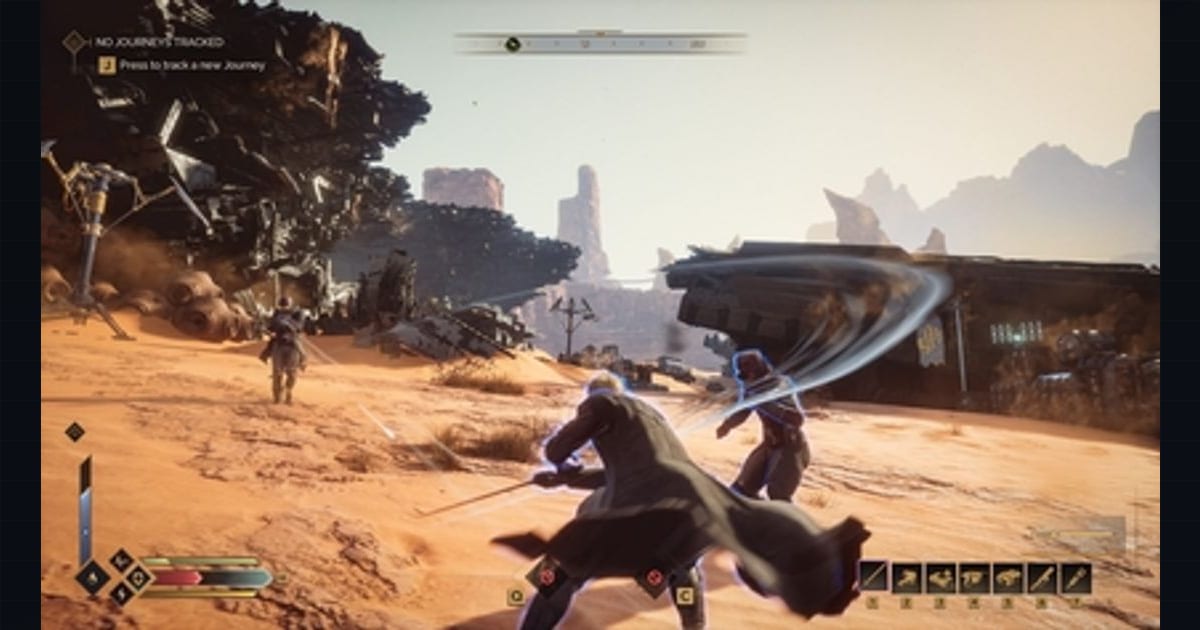
On Arrakis, survival is not merely a matter of fending off rival factions—it is a relentless battle against the desert environment itself. In Funcom’s Dune: Awakening, dehydration and heatstroke kill far more newcomers than laser rifles. Surviving Arrakis requires strict obedience to Fremen water discipline and an acute understanding of the planet’s brutal climate cycles.
Key Takeaways
- Water Is Life: Dehydration causes maximum stamina degradation, blurred vision, and fatal health attrition within minutes under direct sunlight.
- Sunstroke Accumulation: Venturing into direct sun during the midday heat spike increases moisture evaporation by 300%; stick to cliff shadows and cavern crevices.
- Coriolis Sandstorms: Catastrophic sandstorms scour the open desert at regular intervals, instantly destroying unprotected players and eroding base structures not built from hardened plasteel.
Environmental Hazard Survival Protocols
| Hazard | Detection Indicator | Lethal Window | Mitigation Strategy |
|---|---|---|---|
| Direct Sunlight (Noon) | Temperature gauge redline, HUD glare | 3–5 minutes unshielded | Seek deep rock shadows, deploy personal sun canopy |
| Dehydration | Water meter depleted, wheezing audio | 60 seconds of HP drain | Drink distilled blood-water, harvest Dew collector condensates |
| Coriolis Sandstorm | Seismic horn alert, dark wall on horizon | 15 seconds after impact | Seek subterranean rocky caverns or sealed airtight bunkers |
| Sandworm Vibration | Rhythmic bass rumble, shifting dunes | Immediate death if swallowed | Disengage from open sand onto solid rock outcroppings |
Water Harvesting and Stillsuit Optimization
- Dew Collectors: Construct arrays of atmospheric dew collectors along ridge crests to gather ambient condensation during the cooler night cycle.
- Corpse Blood Extraction: Defeated enemies must be dragged to a Deathstill to extract bodily fluids, which are subsequently filtered into potable pure water.
- Stillsuit Maintenance: Keep your Stillsuit fabric repaired. A damaged suit leaks vital perspiration, dropping moisture reclamation efficiency from 95% down to under 40%.
Base Construction Rules for Sandstorm Resilience
Never build wooden or lightweight fabric outposts in the open desert basin. Foundations must be anchored directly into solid bedrock, with blast doors sealed tightly before the Coriolis siren sounds across the dunes.
Shade, Sweat and the Water-Tech Ladder
Why does one unshaded sprint cost so much water? Funcom’s own survival featurette supplies the frame. British military survival instructor John Hudson, assessing the game’s deserts for Funcom’s featurette, puts real desert sweat loss during intense exertion at “several liters per hour,” against roughly half a liter per day in normal conditions, and warns that a deficit of just one liter brings on “fuzzy-headedness, dizziness” and disorientation. Dune: Awakening writes that logic into its climate: the official product page describes a world of “chasing shade and extracting liquid from the bodies of your enemies to refine it into water.”
That makes shade a resource rather than scenery. Hudson’s rule that “any exposed skin needs to be covered” is why the Stillsuit doubles as heat protection, and the featurette notes that a rise of only a few degrees in core temperature impairs judgement and coordination before it kills. Routes are planned by counting shaded outcrops the way you count water.
| Source | What it supplies | Its hidden cost |
|---|---|---|
| Dew and dew plants | Small, reliable top-ups | Direct drinking only works when the bar is nearly empty; best at dawn or night |
| Blood Purifier | Stored water from corpses | Needs an equipped Blood Sack and a base machine |
| Windtrap | Passive water at your base | Consumes crafting materials and raises the base’s Power draw |
| Stillsuit | Recycles your own moisture | A supplement for long trips, not a standing supply |
Once you are in the field, four technologies do the work, and each one fails for a different reason:
- Dew is the tutorial-grade source: plentiful but small, and harvesting it with a Reaper or Scythe yields more at dawn or night than under the midday sun.
- Blood is the grim workhorse. A Blood Extractor pulls fluid from corpses, but only into an equipped Blood Sack; you can drink raw blood in a pinch, at a cost to maximum health, and the sacks are emptied into a Blood Purifier back at base.
- Windtraps generate water passively. Placing one needs Steel Ingots, Silicone Blocks and a Calibrated Servok, plus spare Power at the base, and every extra trap adds to that draw.
- Dew Reapers and Scythes are the high-yield plant tools. Higher Mk tiers demand rarer ingots — a Mk4 wants Aluminium where a Mk2 takes Iron — so upgrading is a materials decision as much as a water one.
The usual progression follows that order. Early on, dew and the tutorial Stillsuit keep a new arrival alive long enough to establish a base; the Blood Purifier then turns the mercenaries you are already killing into a standing stock of water; and Windtraps take over once the base has the Power and materials to run them. Skipping ahead to Windtraps without that power budget simply leaves you thirsty beside an idle machine.
Mobility is part of hydration. Shorter trips through the open desert mean less evaporation, and a sandbike can be fitted with storage so you carry water instead of hunting it; the Stillsuit, meanwhile, is a top-up that cannot fully offset water loss on its own. The desert also refuses to be scheduled: Hudson cautions that sandstorms “come almost out of nowhere,” so the only safe shelter is the one you can reach before the wall of sand arrives.