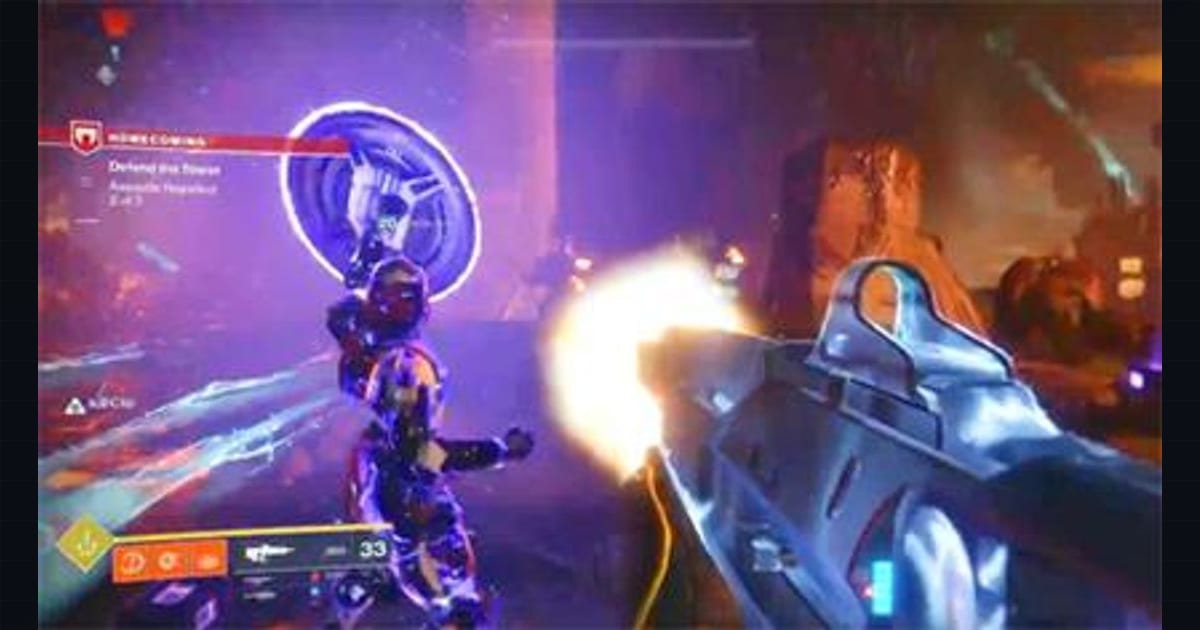
On 20 October, Bungie head of product Josh Deane answered the question that has hung over Destiny 2 since the studio reversed course on its content vault: not what is coming back, but in what order, and on what schedule. His answer was a process note rather than a plan. Deane wrote on X that “there’s going to be a very intentional process for all of it that will take time,” and that Bungie would begin “talking about what our first step is going to look like with more clarity” in the weeks after the post, targeting before the end of October.
The second half of the message is the part worth reading twice. There will be no traditional roadmap. Instead, Bungie will publish “a progress bar” that it says will bring players “closer, more consistently to our dev milestones,” let the studio “be transparent about any challenges we run into,” and “show you the proof of work along the way that unlocks further understanding.” Everything below assumes Update 9.7.0, the Monument of Triumph update of 9 June 2026, which Bungie documents as the last planned live-service content update for the game; the studio’s support documentation notes that further hotfixes may still ship for health and stability, but no new content is planned.
What this covers: what Bungie has actually committed to on Destiny 2 unvaulting, why the studio chose a progress bar over a roadmap, what is in and out of scope, and what state the live game is in while you wait. Why it matters: the unvaulting is the only Destiny 2 roadmap left, and its communication format tells you how much certainty to attach to any future date Bungie gives you. Who should care: lapsed players deciding whether to reinstall now or wait, owners of vaulted campaigns and raids, and anyone tracking how a studio winds down and partially reopens a live-service game.
The chain of statements, in order
The 20 October post is not a standalone announcement. It is the latest step in a sequence, and each step narrowed what the next one could promise.
| Date | Statement | What it commits Bungie to |
|---|---|---|
| 21 May 2026 | Bungie announces the final live-service update for 9 June and says the game will remain playable | An endpoint, and a promise that servers stay up |
| 9 June 2026 | Update 9.7.0, Destiny 2: Monument of Triumph, ships | A permanent content baseline; seasonal events retired |
| 21 Sep 2026 | “The Next Chapter for Bungie”: vaulted campaigns, destinations and raids will return to all players | Scope, but no dates |
| 24 Sep 2026 | Reporting on what the restoration includes and excludes | Seasons and seasonal events out; activities unclear |
| 20 Oct 2026 | Deane: a deliberate process, first step described before end of October, tracked as a progress bar | A communication format, still no dates |
That sequence matters because each entry is narrower than the one before it. May promised an ending. September promised a return without a schedule. October promised a method for talking about the schedule — which is a smaller thing, and Deane framed it that way.
What the October post actually said
Two outlets carried the post with direct quotes, and they agree on the substance. MassivelyOP sourced it to “a tweet from Josh Deane, head of product at Bungie” and read the framing as deliberate and time-consuming. Eurogamer, which spotted the post via The Game Post, quotes Deane acknowledging the obvious: “I know there are a lot of questions on the how, what, when of unvaulting. Including any potential future updates to D2 and what’s beyond for Destiny.”
The progress-bar idea is not decoration. Deane described it as a substitute for the thing players keep asking for, with a specific mechanism: it should “bring you all closer, more consistently to our dev milestones,” “be transparent about any challenges we run into,” and “show you the proof of work along the way that unlocks further understanding.” The stated payoff is expectation management — “when we share a release date we’re all on the same page and have the right expectations.”
Read the verbs closely. Milestones, challenges, proof of work. None of them is a date. A roadmap answers “when”; a progress bar answers “how far along,” and only if the studio is willing to show you the bar moving. Bungie has committed to the second and explicitly declined the first.
What “unvaulting” is actually undoing
The Destiny Content Vault was not an accident or a maintenance failure, and understanding that is the only way to judge how long the reversal takes. Bungie’s own support documentation defines it as “a content model that was implemented in Year 4 of Destiny 2,” built so the studio could “cycle some destination and activity content out of the game (and into the DCV) to make room for new experiences,” with “the potential for vaulted content to return to the game in the future.”
Two details in that definition do most of the work here. First, the DCV was designed with return in mind: Bungie’s own text holds out “the potential for vaulted content to return to the game in the future.” Second, the same page records that “in August 2022, it was announced that Destiny 2 expansions would no longer be vaulted,” although seasonal content still leaves when a new expansion arrives. Expansion-scale vaulting, in other words, was already over years before the studio announced it was reversing direction.
What the September post added was scope. Kotaku reported that Bungie is “bringing back the vaulted parts of Destiny 2, including its Red War campaign from the game’s launch,” and quoted the studio’s own wording: “we are beginning the work of bringing vaulted Destiny 2 campaigns, destinations, and raids back into the game, where they will be available to all Destiny 2 players.” Free to everyone, in other words, not gated behind the original purchase.
Why the work is not a file restore
This is the single most useful paragraph Bungie has published on the subject, and it explains why Deane’s “will take time” is not a hedge. From the September post:
“Bringing this content back is not as simple as restoring old files. Changes made to Destiny 2 since Beyond Light require us to update lighting, encounters, combatants, and other underlying systems. That work will take time, but it is necessary to ensure returning content meets the stability and gameplay standards of Destiny 2 today.”
Every item on that list is a systems dependency rather than an asset. Lighting changed with the engine and art pipeline that arrived around Beyond Light. Encounters have been rebalanced repeatedly. Combatants — the enemy units themselves, their behaviours and their damage models — have been reworked. A restored campaign is not a level shipped from an archive; it is a level re-authored against a game that no longer works the way it did when the level shipped.
GamesRadar+ recorded Deane putting the same point more plainly in the accompanying video: “It’s going to take some time. I wish we could just flip a freakin’ switch. But we’re going to commit to unvaulting the Destiny 2 campaigns, the destinations, the raids that never should have been ripped away to begin with.” He also called the removed content “what’s rightfully yours,” which is the clearest statement of the studio’s position on paid content that was taken offline.
What is not coming back
The scope limits were reported within days of the September announcement and have not been walked back since. The account below follows Eurogamer’s summary of reporting by Forbes’ Paul Tassi, which is the most detailed public description of the plan and is attributed as such rather than presented as Bungie’s own statement.
| Content class | Returning? | Basis for the answer |
|---|---|---|
| Campaigns and story content | Yes | Bungie’s September post, quoted by Kotaku |
| Destinations and patrol zones | Yes | Bungie’s September post, quoted by Kotaku |
| Raids | Yes | Deane, via GamesRadar+ |
| Cost to players who never owned it | Free | Reporting summarised by Eurogamer |
| Expired live-service seasons | No | Reporting summarised by Eurogamer |
| Seasonal events (Guardian Games, Solstice, Festival of the Lost, The Dawning) | No | Retired in Update 9.7.0, per Bungie Help |
| Seasonal activities such as Battlegrounds and Deep Dives | Unclear | “No indication they will return,” per Eurogamer |
| Every Strike, Crucible and Gambit map | Unlikely | Higher chance only for Strikes with narrative hooks, per Eurogamer |
The reasoning behind the exclusions is worth internalising, because it explains why Bungie will not simply restore everything the vault swallowed. Seasons were transient by design, and some of them carried story that set up later expansions, so their absence leaves gaps in the narrative a restored campaign will not fill. Seasonal events are excluded partly because the weapons they introduced are already in the game, and partly because cycling events would “require a Destiny 2 live-ops team that no longer exists.”
That last phrase is the constraint hiding under every optimistic reading of the unvaulting. Eurogamer also recorded the flat version of it: “Monument of Triumph really was end-of-service for the live part of Destiny 2,” and no patches are expected between now and the unvaulting beyond major bug fixes. Bungie’s own support documentation confirms the same posture, telling players that after 9.7.0 the game “will no longer receive planned live-service content updates,” while allowing that “we may need to release a hotfix in the future for the health and stability of the game.”
What the live game looks like while you wait
If you are deciding whether to reinstall in the window before Bungie’s first unvaulting step, the useful question is what the game already contains at Update 9.7.0. The support guide’s available-content list is the authoritative answer, and it is broader than the post-sunset coverage suggested.
- Raids are free to access. The Monument of Triumph FAQ tells returning players that “there are also some Raids available to all players, such as Vault of Glass, King’s Fall, and Crota’s End.”
- The Power cap is frozen. “There is no Power Level increase for Monument of Triumph. The maximum Power cap will remain at 550.”
- Levelling is fast on purpose. Freshly returning Guardians start at 10 Power while loot drops at 300+ Power, which Bungie describes as a quick catch-up method introduced in place of the old catch-up chest.
- Stasis no longer needs an expansion. Completing the Beyond Light campaign on Europa unlocks it, and Bungie lists that campaign as “available to all players.” Strand still requires Lightfall; Prismatic still requires The Final Shape.
- Two activities became permanent. Pantheon and Sparrow Racing League were added in 9.7.0 and, per Bungie, “will remain in the game indefinitely.”
- The seasonal calendar is gone. Guardian Games, Solstice, Festival of the Lost and The Dawning are all retired, though some associated armour sets moved to Eververse for Bright Dust.
- Trials still has a gate. Access requires SMS verification plus ownership of The Edge of Fate, Renegades, or Destiny 2: The Collection, which shipped on 9 June 2026 with all Dungeon Keys included.
The broader context for why the game ended up here is financial, and IGN reported it plainly: Bungie’s final update arrived “nearly nine years after launch,” following impairment losses against Bungie’s assets that IGN reported at $765 million, and after Marathon launched in March 2026 and, per that report, failed to meet sales expectations according to analysts. None of that is a reason the unvaulting will fail, but it is the reason the studio doing it is a smaller one with no live-ops team behind it.
How to read the first progress-bar update
Deane said the first step would be described “with more clarity” targeting before the end of October. When that update lands, three things are worth checking, in this order.
First, does it name a specific piece of content? “A campaign, a destination, a raid” is a commitment someone can be held to; “the beginning of the restoration” is not. Second, does it publish a stage list? A progress bar implies named stages with visible position within them. If the first update shows milestones without telling you which one the studio is on, the format is a roadmap with different graphics. Third, does it attach a date to anything at all? Deane’s stated goal is that “when we share a release date we’re all on the same page” — so the appearance of a date is the point at which the process stops being a process and becomes a schedule.
What the update will not be is evidence that Destiny 2 is back in development. Eurogamer’s summary of the September reporting is explicit that the unvaulting “doesn’t mean the studio is returning to regular Destiny 2 development,” and that reading is consistent with everything Bungie has said since May. The studio is restoring a back catalogue, not reopening a pipeline — and the difference is the reason the work is measured in campaigns rather than seasons.
Until that first update lands, the practical advice is dull and correct. If you own vaulted content, nothing you do now changes what comes back, because it is coming back free. If you are returning to the live game, the 9.7.0 baseline above is what you are returning to, at Power cap 550, with the seasonal calendar retired. The one thing worth watching is not the date Bungie eventually prints — it is whether the progress bar ever moves on its own.