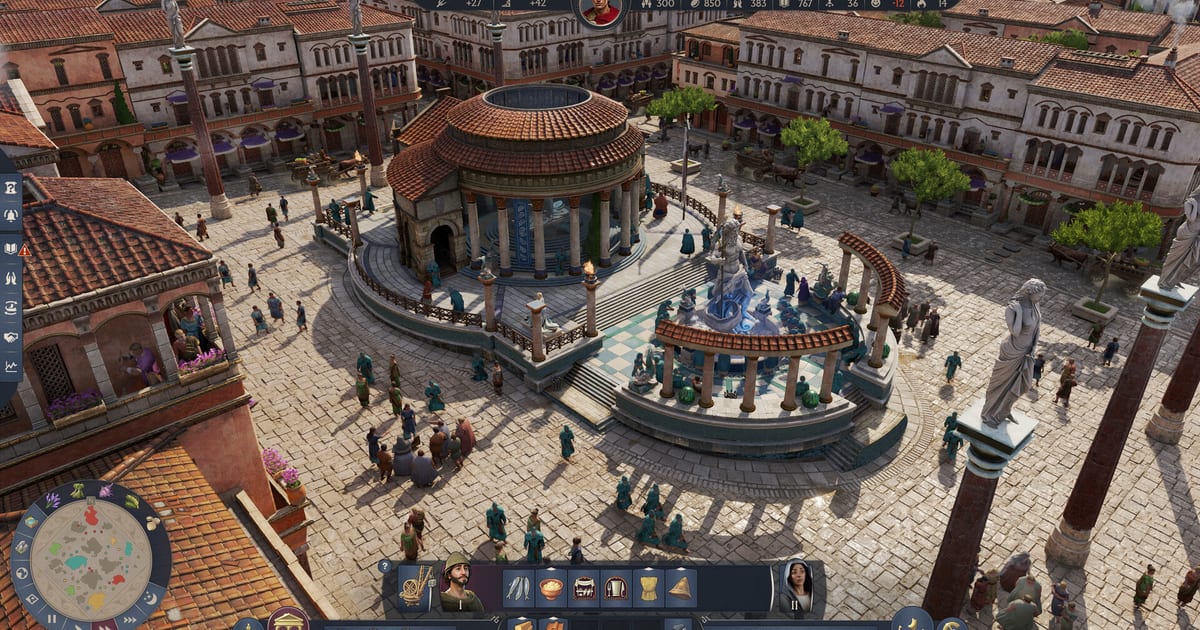
Ubisoft Mainz’s Anno 117: Pax Romana launched on 13 November 2025 for PlayStation 5, Windows, and Xbox Series X/S, becoming the fastest-selling entry in the Anno series shortly after release. The real-time strategy title is the eighth installment in the franchise and the earliest historical setting Anno has covered to date.
What changed: Anno 117: Pax Romana launched on 13 November 2025 for PlayStation 5, Windows, and Xbox Series X/S, becoming the fastest-selling entry in the series. Why it matters: The eighth Anno installment sets its city-building and trade systems in the Roman Empire, with provinces in Latium and Albion. Who should care: City-building players deciding whether the Pax Romana setting and the new attribute system suit them.
Setting & Campaign Structure
Anno 117 is set during the Pax Romana, a period of relative peace and prosperity within the Roman Empire. Players assume the role of a Roman governor and choose a starting province, governing either Latium under the Roman Empire or the Celtic kingdom in Albion.
In Albion, players can spread Roman influence, pursue a fully Celtic cultural path, or blend both. The game offers a story mode with two predefined characters and an endless mode where players select a province, adjust difficulty, and face rival governors with distinct personalities and playstyles.
Core Mechanical Updates
The city-building loop starts players on an island with limited resources, tasking them with building a stable economy before expanding to other islands. Population advances from Liberti to Patricians as needs are met, with advancement affected by nearby prestige buildings and polluting industrial structures. Paved roads extend the effective range of buildings and improve efficiency.
A new attribute system governs income, population, and health, each influenced by building placement and goods supply. Production chains can span multiple islands, supported by trade routes with assigned ships, warehouses, waystations, and intra-region hubs. Players can stabilize downturns by issuing buy orders at harbors.
Combat & Diplomacy
Diplomacy revolves around the Emperor, who issues demands affecting the player’s reputation with Rome. Fulfilling these demands grants bonuses, while refusal incurs penalties; high reputation can earn Consul status, while opposing the Emperor may yield Proconsular authority. Rival governors can be engaged diplomatically or militarily.
Naval and land combat both feature, with land units following a rock-paper-scissors system across melee, ranged, and cavalry. A strong navy can largely bypass land engagements. Religion and research function as parallel progression systems, with belief tied to chosen gods and schools generating research points for a technology tree.
Next read
- For another late-game production-chain puzzle in the same series, see Anno 1800 — Late-Game Investor Supply Chain Build Guide.
- For another city-builder with survival pressure, see Against the Storm — Beginner Primer: Biomes, Orders & the First 10 Decisions.
- For another historical real-time strategy title, see Men of War II — Best Way’s WW2 Real-Time Tactics Sequel Released on PC.